
Athens on the Isar: Visual-Arts Based Medical Education in Munich
“Switch!” Sheets of paper passed to the left. Drawing continued. Another thirty-seconds later. “Switch!” Another pass, another round of furious sketching. Thirty seconds after thirty seconds after thirty seconds punctuated by…”Switch!” and the rustle of paper and the fervent scratch of graphite[1].
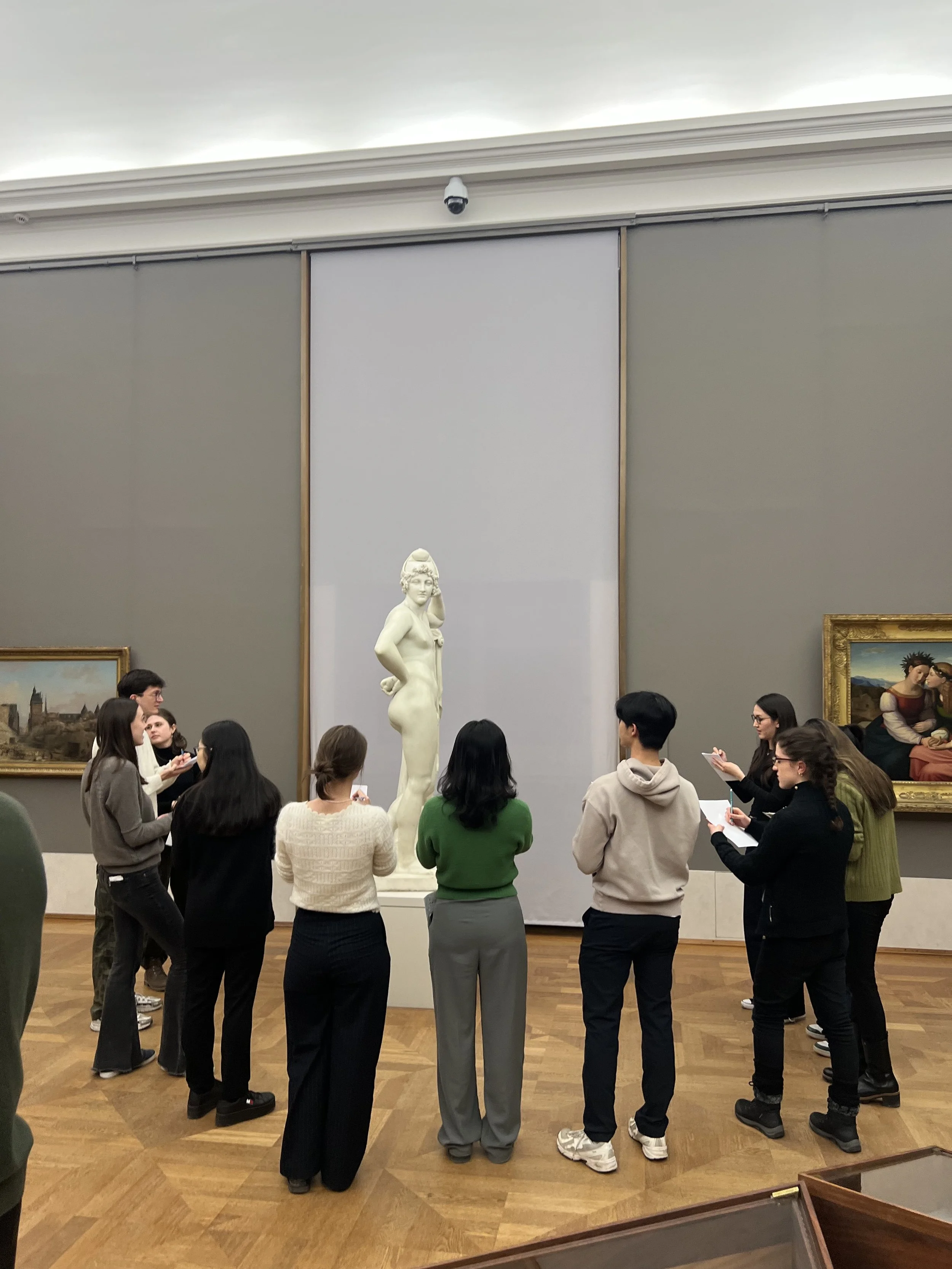
Pass the Drawing art activity
Two groups of about a dozen students from Germany and Austria circumscribed statues in Munich’s Alte Pinakotheke Museum. They were hastily sketching the angle of a figure , attempting with ever-increasing difficulty to render what they saw from their own perspective against the overlapping viewpoints of their colleagues that piled onto the page with every pass. After about fifteen minutes, the blank paper each student started their exercise with was returned to them crammed with confusedly incoherent vantages. We regrouped and began to discuss the metaphor of medical perspectives from various consulting subspecialties called to evaluate a single patient. Our modern version of the 9 blind men and the elephant.
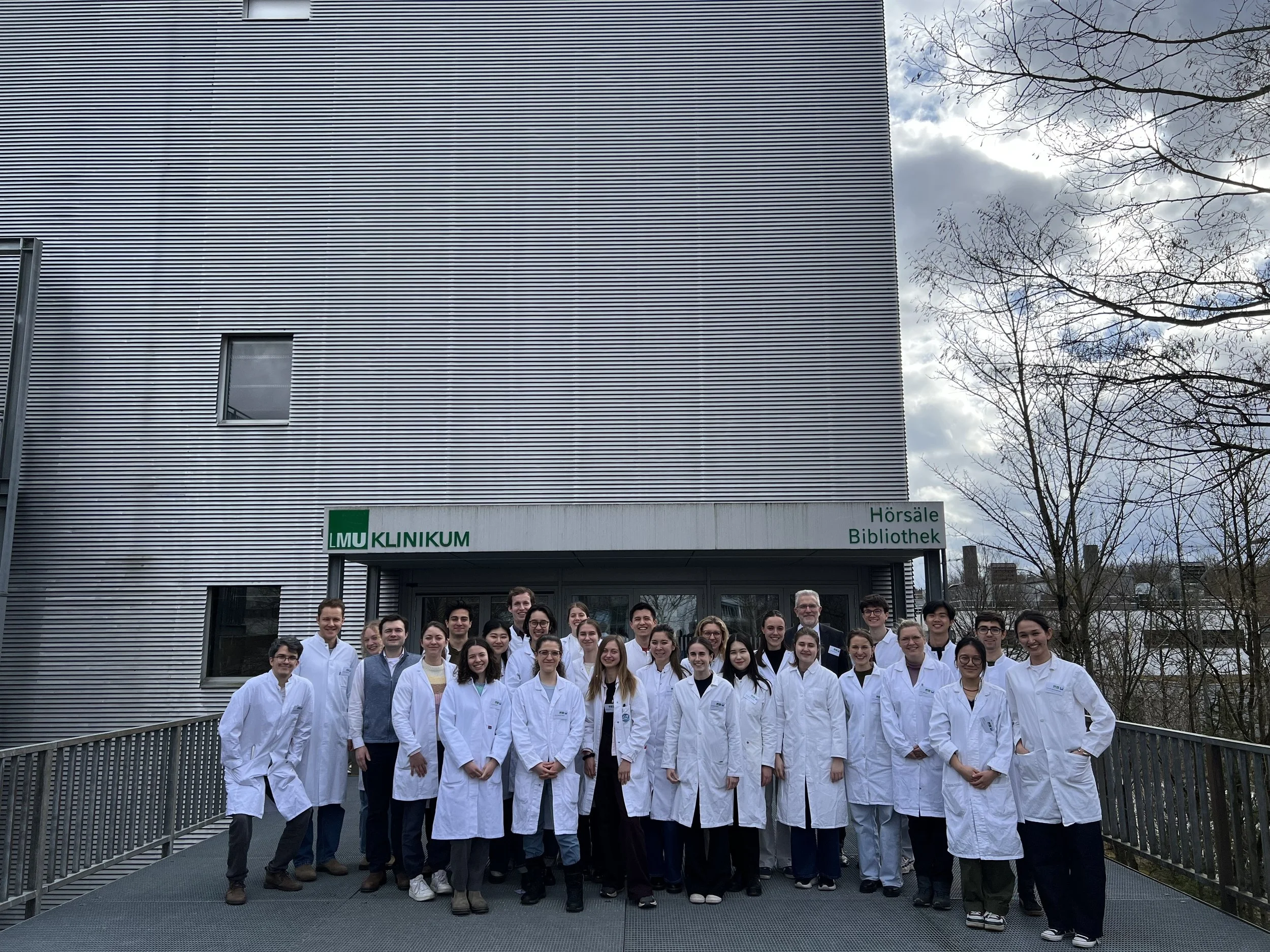
Klinikum Grosshadern
These twenty-two students from various medical schools in Germany and Austria were participating in their first visual-arts based medical education exercises after a long day of history-taking, exam-making, and presentation-giving at Klinikum Grosshadern. And they loved it! Equally impressive, so did the neurology faculty, such as Professor Konstantinos Dimitriadis, the neurology clerkship director for Ludwig Maximililian Universitat (my academic host for the week). A skilled innovator in neurology education, I was so pleased to see him excited about how the students were interacting with the clinical and professional elements of medicine through the medium of art.
I had been invited from Tufts Medical Center, along with Yale neuro-oncologist Dr Joaquim Beahring, by the local student leadership from the IPOKRATES Foundation, which since the 1970s has facilitated American physicians to German and Austrian medical schools for a week of teaching on and off the wards. At the end of one day, I seized the opportunity to take the students to a museum for visual-arts based medical education activities.
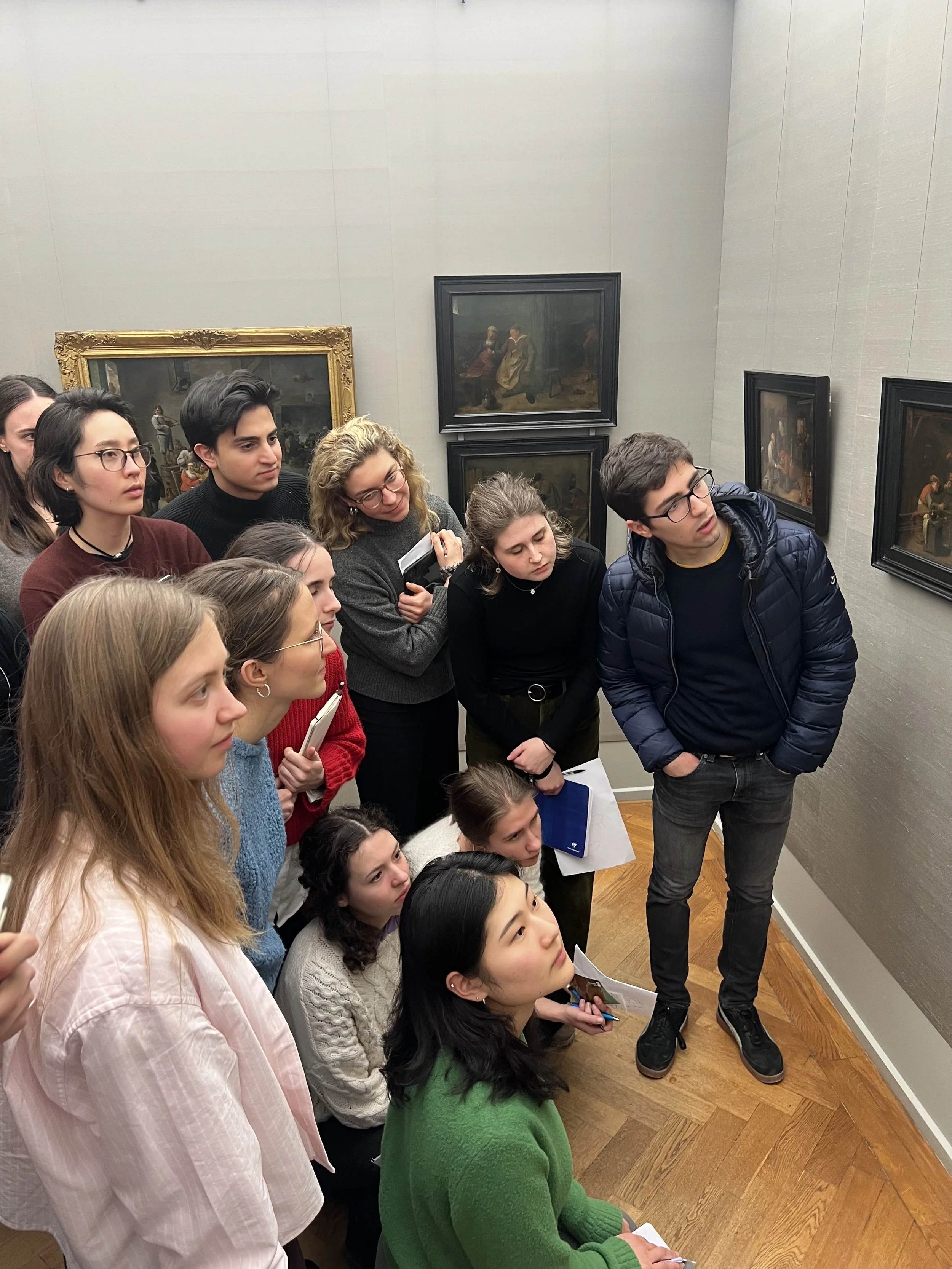
Visual Thinking Strategies discussion
After opening the session with a 3-question series (What is going on in this picture? What do you see that makes you say that? What more can we find?) from Visual Thinking Strategies[2] , we proceeded through the museum to engage with paintings and sculptures from the Dutch Masters through to the French Impressionists. Some works were explicitly medical in their content and invited students to apply their observation skills on both the disease depicted as well as their perspective on the patient-physician interaction. Other works weren’t obviously or explicitly clinical, yet afforded students a means of reflecting upon their experience as medical students and what they aspire to be as clinicians by finding themes, virtues, and passions represented in the artwork.
Third-year medical student from Turkey, Ataberk Özçelik, said:
“I had never experienced a museum visit in that way before. Observing how differently each person approached and interpreted the same sculpture while drawing it taught me a life lesson I probably will never forget. It illustrated that there is rarely a single “true” answer; most situations are far more complex and ambiguous than they initially appear. Our individual backgrounds shape our perspectives, and that diversity meaningfully influences how we perceive the same reality.
In my opinion medicine is not purely academic, which makes it special as a field. It carries a deeply human dimension. We are born in hospitals, and many of us or our beloved ones die in hospitals. As physicians, we accompany patients through defining milestones of their lives. Along with that there is also a strong element of apprenticeship in medicine, learning and teaching in close personal exchange, which makes it less abstract and more profoundly human. This human aspect inevitably brings multiple perspectives into play, and I believe we should actively acknowledge and value them. I appreciated experiencing this lesson through art. It was a powerful reminder of the importance of perspective in both medicine and life.”
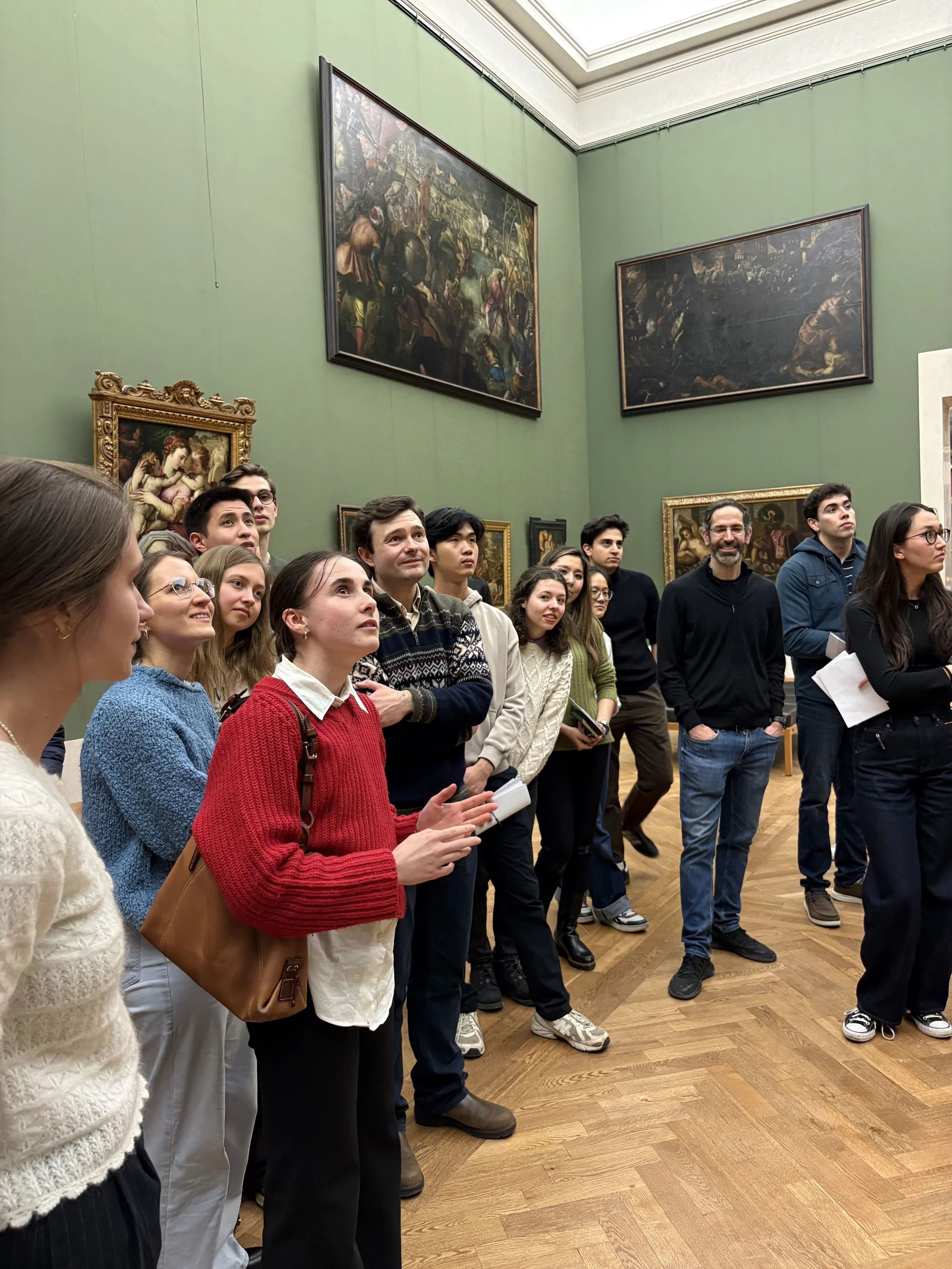
Art discussion and observation
Another student, Adèlina Lu said, “One activity I particularly liked was drawing the sculpture that stood in front of us. Being challenged to draw and be creative is something we almost never do in medical school. I found very interesting to observe how different people’s approach may be. I learned how subjective observation can be, as everyone noticed different aspects of the same artwork. Even things we often consider objective in medicine, such as laboratory tests, can involve subjective decisions, for example when deciding which test to order first or how one may jump to conclusions a single lab finding when other lab findings haven’t arrived yet. It also showed me how valuable it is to discuss these observations with others. In addition, I think activities like this help students and colleagues get to know each other better, in terms of how they think and how they interpret.”
Our word, empathy is an invented English word to translate the German Einfühlung, which is an ‘in-feeling.’ This in-feeling was one way Austrian psychiatrists described transference experienced by patients during analysis, and was likened to the in-feeling that beholders experienced from a moving work of art.
It was, therefore, an inestimable pleasure, to offer once more an arts-based educational approach to Einfühlung/Empathy in medical education. It was, to my knowledge, the first arts-based medical educational session held at this museum for the LMU/TUM students to date, and I am extremely grateful for the faculty and student organizers for allowing me to co-create this groundbreaking evening.

Michael Stanley, MD
Michael Stanley, MD
Director, Neurocognitive Division,
Tufts Medical Center
Faculty Advisor, Visual Arts in Healthcare Program,
Brigham & Women’s Hosptial
[1] Slavin, Ruth; Wiliams, Ray; Zimmermann, Corinne. Activating the Art Museum: Designing Experiences for Health Professionals. American Alliance of Museums; 2023.
[2] Yenawine, Philip. Visual Thinking Strategies: Using Art to Deepen Learning Across School Disciplines. Harvard Education Press; 2013